EV vs Plug-in Hybrid: The Great Decision
Understanding the bridge technology versus the total electric commitment.
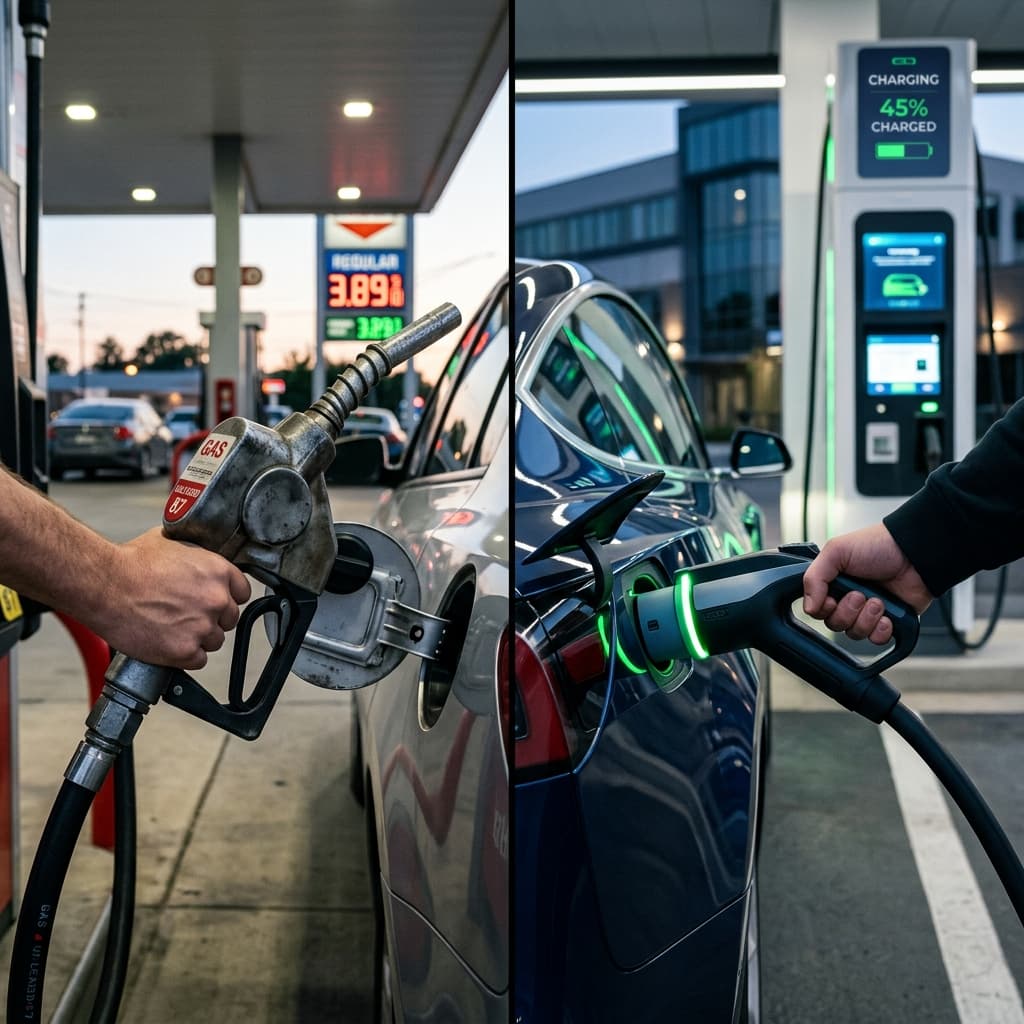
As the automotive world pivots away from pure internal combustion, buyers are often caught between two paths: the **Battery Electric Vehicle (BEV)** and the **Plug-in Hybrid Electric Vehicle (PHEV)**. Both offer the ability to drive using electricity, but they serve vastly different lifestyles. Understanding where you fit on this spectrum is the key to avoiding buyer's remorse.
The Case for the BEV (Pure Electric)
A full EV is exactly what it sounds like: a giant battery on wheels with one or more electric motors. There is no gasoline backup, no tailpipe (usually), and no transmission in the traditional sense. These cars are built for simplicity and maximum efficiency.
- Simplicity: An EV motor has about 20 moving parts. A gas engine has over 2,000. This translates to significantly lower long-term maintenance costs.
- Performance: Instant torque means even budget EVs feel faster and more responsive than luxury gas cars in city traffic.
- Storage: Removing the engine often allows for a "frunk" (front trunk), providing extra utility.
The Case for the PHEV (The Best of Both Worlds?)
The Plug-in Hybrid is the ultimate "security blanket" for those transitioning to electric. It contains both a battery (large enough for 30–50 miles of range) and a full gasoline engine. You plug it in at night, drive your commute on pure electricity, and never touch a drop of gas for weeks—until you decide to take a 500-mile road trip. At that point, it behaves just like a regular hybrid.
Who is it for? If you live in an area with a poorly developed charging infrastructure, or if you only have one car and frequently drive long distances through rural areas, a PHEV like the Toyota RAV4 Prime or Volvo XC60 Recharge is a phenomenal choice.
The "Hidden" Downsides of PHEVs
While PHEVs sound like the perfect compromise, they come with a weight and complexity penalty. Since you're carrying a gas engine *and* a battery, the car is heavier than a standard hybrid and mechanically more complex than a BEV. You still have to pay for oil changes, cooling system flushes, and traditional engine repairs. Furthermore, once the small battery is depleted, you're essentially driving a heavy gasoline car with slightly worse fuel economy than a lightweight standard hybrid.
The Lifestyle Checklist
Do you have a second car? If yes, make the new one a BEV. Do you live in an apartment with no charging? Avoid both and get a standard hybrid. Do you commute 25 miles and road trip monthly? The PHEV is your champion.
30‑second decision cheat sheet
- Garage + Level 2 charger: pick a BEV, use our savings calculator.
- No home charging, long trips monthly: choose a PHEV, set electric range ≥40 miles.
- Apartment + short commute: PHEV or efficient hybrid until charging is solved.
Numbers to sanity‑check:
- Home kWh rate ÷ mpg-e → if <$0.06 per mile, BEV wins.
- Gas price ÷ 35 mpg → if >$0.10 per mile, PHEV needs daily charging to beat gas.
Try this next
Pick your favorite BEV and PHEV, then run a head-to-head in our Compare tool with your commute miles. If the verdict doesn't change after you toggle gas at $6/gal, you can stop second-guessing.
Environmental Impact and Resale Value
From a sustainability standpoint, the BEV is the clear winner over its lifetime, assuming the grid is continuing to green. In terms of resale value, the market is currently volatile. High-end BEVs are depreciating faster due to rapid tech iterations, while PHEVs are holding value remarkably well because they appeal to the "undecided" mainstream buyer.
At the end of the day, your choice should be dictated by your longest frequent journey and your access to a Level 2 home charger. Don't let tribalism decide for you—let the geography of your life lead the way.
Use the article, then make a decision
Spoiler: It's cheaper than gas, but the math isn't as simple as everyone tells you. We break down home vs. public charging costs in 2024.
Debunking the 'battery death' myth. We look at 10 years of data from over 20,000 electric vehicles to see how they age.
Why that $500 wallbox might actually cost you $3,000 to get wired up. We break down permits, panel upgrades, and labor in 2024.
Stop reading generic advice.
Run your exact commute and energy rates through our calculators.