Home EV Charger Installation: The Real Price Tag
Understanding why the hardware is the cheapest part of the equation.
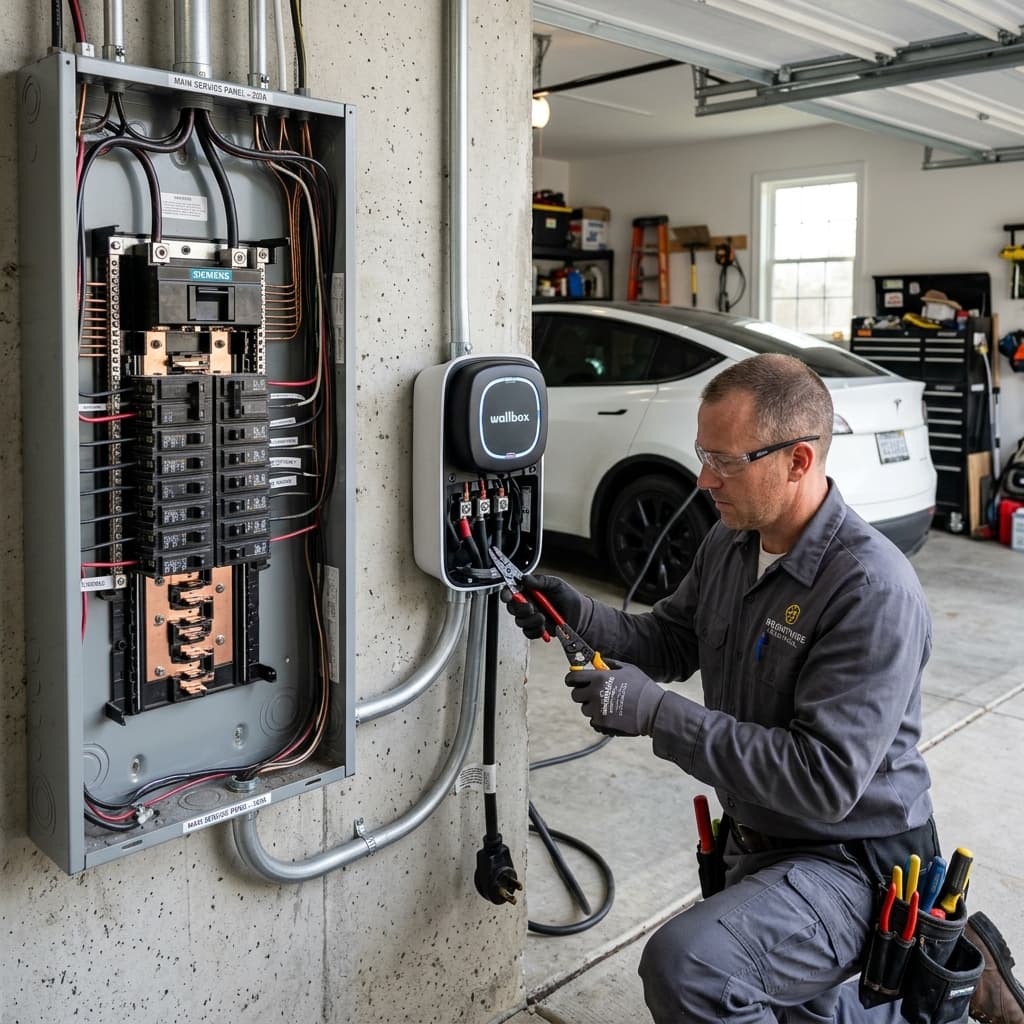
You’ve just signed the papers for your shiny new electric vehicle. The salesperson mentioned you can "just plug it in at home." While technically true (you can use a standard 120V outlet), you’ll soon realize that gaining only 3 miles of range per hour is a recipe for frustration. You need a **Level 2 Home Charger**. But before you buy that $500 box on Amazon, you need to understand the complex world of electrical infrastructure.
The Basic Math of Level 2 Charging
A Level 2 charger runs on 240V electricity—the same stuff your clothes dryer or electric oven uses. It typically pulls between 32 and 48 amps. This allows you to fully charge most EVs overnight in about 6–9 hours. The hardware (the "EVSE" or wallbox) costs between **$350 and $750**. Popular models like the Wallbox Pulsar Plus or ChargePoint Home Flex are reliable and smart-enabled.
The 'Gotcha': Your Electrical Panel
This is where the costs explode. Most older homes (built before 1990) have a 100-amp or 125-amp electrical panel. If you have an electric stove, air conditioning, and a dryer, your panel is already near its limit. Adding a 50-amp circuit for an EV charger could overload the system.
If an electrician tells you that you need a **Panel Upgrade**, be prepared to spend **$2,000 to $4,500**. This involves replacing the entire service panel, potentially upgrading the wire coming from the street, and coordinating with the utility company. It is a major home improvement project, not a simple plug-and-play fix.
Labor and Distance
Electricians charge by the hour and by the foot of wire. Copper wire is expensive. If your garage is right next to your electrical panel, a basic install might cost **$500 to $800**. However, if the panel is in the basement on the opposite side of the house, and the electrician has to "snake" wire through finished ceilings or trench through a driveway, costs can easily hit **$1,500 to $2,500** just for labor and materials.
Permits and Inspections
Do not skip the permit. If your home has an electrical fire and the insurance company finds an unpermitted 50-amp high-voltage line, they can (and will) deny your claim. Permits typically cost **$50 to $200** and include a safety inspection by the city.
Load Management: The Budget Alternative
If your panel is full but you don't want to spend $4,000 on an upgrade, look into **Smart Load Management** or "Circuit Sharing" devices. Companies like Wallbox or DCC make systems that automatically throttle the EV charger if the rest of the house starts pulling too much power. These devices cost around **$500** but can save you thousands in utility upgrades.
The 30% Federal Tax Credit
The good news? Under the Inflation Reduction Act, you can often claim a tax credit of **30% of the hardware and installation cost** (up to $1,000). Always check if you live in an "eligible census tract" before banking on this, but for many, it significantly softens the blow.
Skip the paperwork headache
Use our savings calculator with "home charging" toggled on, then export the PDF and hand it to your electrician. It shows expected kWh draw and makes permitting easier.
Final Verdict: Plan for **$1,500 total** if your house is modern, and **$3,500+** if your house is old. It’s a one-time investment that pays for itself in gas savings, but it’s definitely not "free."
Use the article, then make a decision
Spoiler: It's cheaper than gas, but the math isn't as simple as everyone tells you. We break down home vs. public charging costs in 2024.
The ultimate showdown between pure electric commitment and the convenience of a gasoline backup. Which technology fits your 2024 lifestyle?
Debunking the 'battery death' myth. We look at 10 years of data from over 20,000 electric vehicles to see how they age.
Stop reading generic advice.
Run your exact commute and energy rates through our calculators.