How long do EV batteries actually last?
The 10-year myth debunked with real-world telematics data.
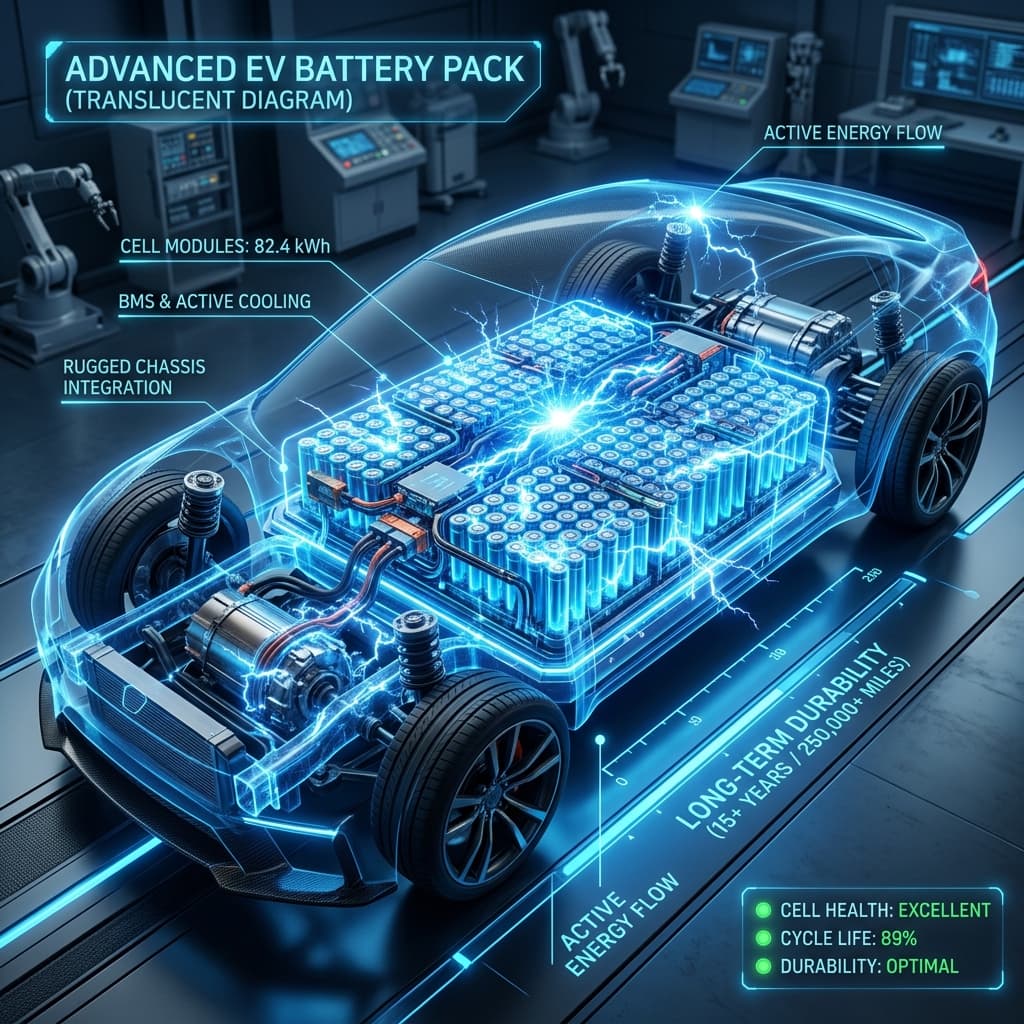
The single biggest anxiety for a used EV buyer is the "dead battery" bogeyman. We've all seen the viral headlines of a 2012 Nissan Leaf needing a $15,000 battery replacement. But the reality for modern EVs is drastically different thanks to liquid cooling, better chemistry, and smart thermal management software.
The Degradation Curve: It's a Slope, Not a Cliff
Lithium-ion batteries don't just stop working one day. Instead, they slowly lose capacity over time. For the average modern EV (made after 2018), data from firms like Recurrent Auto suggests that batteries lose about **1.5% to 2% of their total capacity per year**. This means after 100,000 miles and 10 years of driving, you can expect about 80% to 85% of your original range to still be available.
Because most EVs now come with 250+ miles of range, even after a decade, a "degraded" car still has over 200 miles of range—more than enough for the vast majority of drivers. The car remains perfectly usable, just slightly less capable on long road trips.
Why Modern Batteries Outlast the Early Ones
The early Leaf examples that gave EVs a bad rep used "passive air cooling," meaning the battery just sat in the heat or cold without any help. Modern cars (Tesla, Hyundai, Rivian, Lucid) use **liquid thermal management**. They have radiators and pumps that keep the individual battery cells at the perfect "room temperature," whether it's 100°F in Arizona or -10°F in Chicago. This drastically slows down chemical aging.
The 20/80 Rule for Longevity
If you want your battery to last 20 years, avoid keeping it at 100% or 0% for long periods. Lithium batteries "like" to be between 20% and 80% state of charge. Use the 100% top-off only when you're about to leave for a long trip.
The Million Mile Battery?
Companies like CATL and Tesla are already working on LFP (Lithium Iron Phosphate) batteries that are rated for 3,000 to 5,000 charge cycles. A "typical" cycle might get you 250 miles. Multiply that by 4,000 cycles and you get a theoretical **1 million mile lifespan**. For these cars, the battery will likely outlast the leather seats, the suspension, and the electronics by a significant margin.
Warranty Security
Federal law in the US requires manufacturers to warranty the battery for at least **8 years or 100,000 miles** (whichever comes first). In some states like California, this is extended to 10 years or 150,000 miles. If the capacity drops below 70% during that time, you get a new battery for free. This safety net has made the "dead battery" fear largely irrelevant for first and second owners.
3 quick ways to keep your pack healthy
- Charge to 80–90% for daily use; save 100% for road trips.
- Avoid baking the car at 100% in direct summer heat; park in shade or drop to 70%.
- Use fast charging as a road-trip tool, not a daily habit.
The bottom line: The battery is no longer the weakest link in the car's lifecycle. It is a durable, precisely managed piece of industrial hardware that will likely serve you for 15+ years before needing significant attention.
Use the article, then make a decision
Spoiler: It's cheaper than gas, but the math isn't as simple as everyone tells you. We break down home vs. public charging costs in 2024.
The ultimate showdown between pure electric commitment and the convenience of a gasoline backup. Which technology fits your 2024 lifestyle?
Why that $500 wallbox might actually cost you $3,000 to get wired up. We break down permits, panel upgrades, and labor in 2024.
Stop reading generic advice.
Run your exact commute and energy rates through our calculators.