How much does it really cost to charge an EV?
Spoiler: It's cheaper than gas, but the math isn't as simple as everyone tells you.
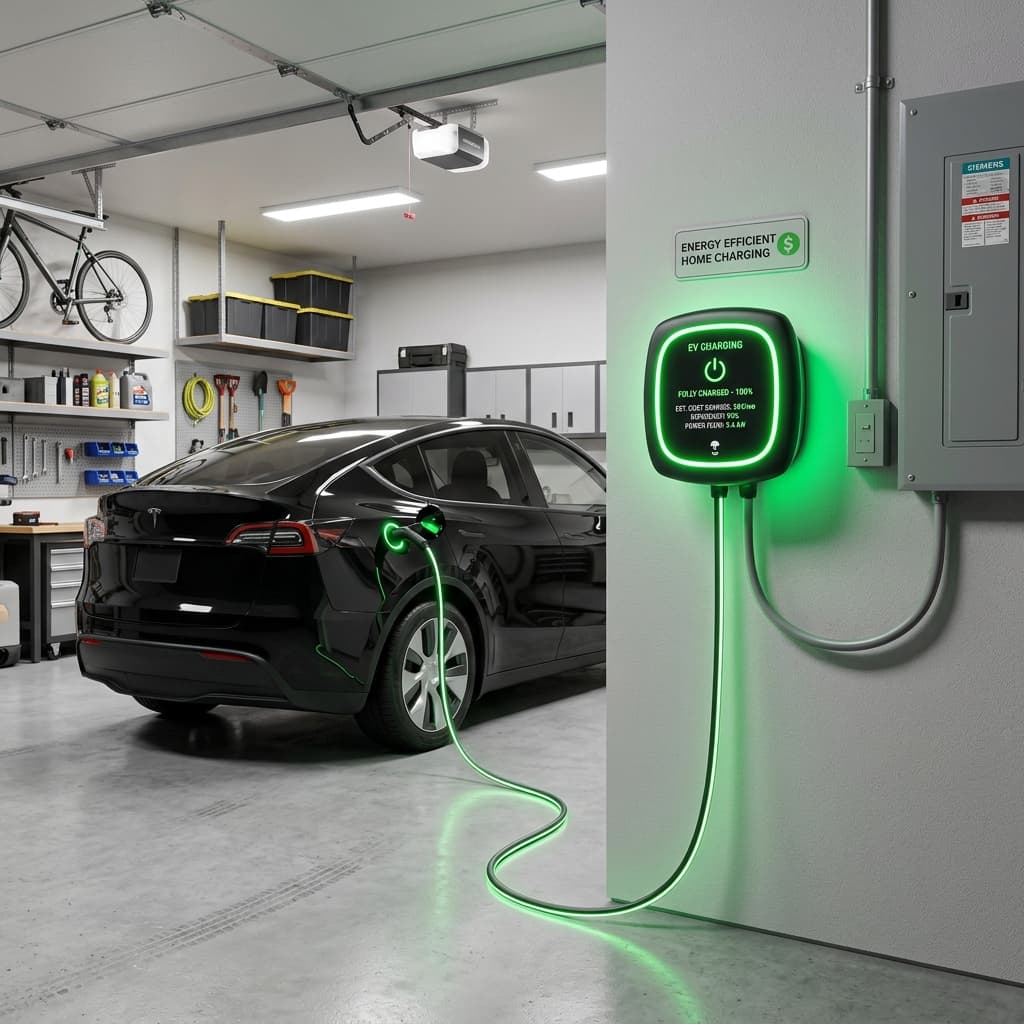
The most common question people ask before switching to an electric vehicle is: "How much am I actually going to save on fuel?" The short answer is: a lot. But the nuance lies in *where* and *how* you charge. Unlike a gas car, where the price is roughly the same at every corner station, EV charging costs can vary by as much as 400% depending on the source of electricity.
The Gold Standard: Residential Home Charging
For 90% of EV owners, home is where the heart (and the charger) is. In the United States, the average price of residential electricity is roughly **16 cents per kilowatt-hour (kWh)**. To put that into perspective, let's look at the math for a standard long-range EV like a Tesla Model Y or a Hyundai Ioniq 5, which typically have batteries around 75 to 80 kWh.
- Full Charge Cost: 80 kWh × $0.16 = $12.80
- Real-World Range: ~270 miles
- Cost Per Mile: ~4.7 cents
Compare this to a modern, efficient gas car getting 30 MPG. With gas prices at a national average of $3.50 per gallon, you're paying about 11.6 cents per mile. Over 15,000 miles a year, the EV owner spends **$705** on fuel, while the gas car owner spends **$1,740**. That is a direct, post-tax savings of over $1,000 every single year just by plugging in at home.
The Convenience Tax: DC Fast Charging
When you're on a road trip, you don't have the luxury of waiting 8 hours for a Level 2 home charger. You need a DC Fast Charger (DCFC). Networks like Electrify America, EVgo, and Tesla's Supercharger network provide extreme power but at a premium price. Rates here often hover between **45 cents and 60 cents per kWh**.
Suddenly, that same 80 kWh charge costs you $40 to $48. At 48 cents per kWh, your cost per mile jumps to 14 cents—which is actually **more expensive** than driving a fuel-efficient hybrid or even a small gas sedan. This is why EV veterans tell you: "Use public fast chargers for survival on trips, not for daily driving." If you don't have access to home or workplace charging, the financial benefits of an EV diminish significantly.
Efficiency Factors: Not All Miles are Created Equal
Just like gas cars have MPG, EVs have **efficiency ratings measured in mi/kWh**. A small, aerodynamic sedan like a Lucid Air might get 4.5 miles per kWh, whereas a massive Ford F-150 Lightning might only get 2.0 miles per kWh. This means the truck costs more than twice as much to "refuel" for the same distance.
Pro Tip: Time of Use (TOU) Rates
Many utility companies offer special "EV plans" where electricity costs as little as 4-8 cents per kWh during the middle of the night (off-peak). If you charge from 11 PM to 6 AM, your yearly fuel bill could drop to under $300.
Maintenance: The Hidden Savings
While not strictly "fuel," the cost of ownership is tied to the energy system. EVs have no oil to change, no spark plugs to replace, and no transmission fluid to flush. The regenerative braking system also means your brake pads can last 100,000 miles or more. When you add the fuel savings to the avoided maintenance, the total "cost of energy" for an EV is overwhelmingly lower than any internal combustion engine on the market today.
In conclusion, the math favors the EV heavily—provided you can charge at home. If you're relying on the public grid, you're paying for convenience, and the financial gap closes. Always check your local utility rates before making the switch.
How to price your own charging in 5 minutes
- Look up your off-peak $/kWh on the utility bill (or Google "<utility name> EV plan").
- Open our Charging Cost Calculator and plug in your monthly miles plus that rate.
- Toggle "mostly fast charging" to see the worst case. If the gap between home and fast charging is >3×, prioritize installing Level 2 at home.
When public fast charging still makes sense
Use it for: road trips, apartment living without workplace charging, or as a bridge while waiting for home-installation. If it's your daily plan, rerun the math with a hybrid in our TCO calculator—it may be cheaper.
Use the article, then make a decision
The ultimate showdown between pure electric commitment and the convenience of a gasoline backup. Which technology fits your 2024 lifestyle?
Debunking the 'battery death' myth. We look at 10 years of data from over 20,000 electric vehicles to see how they age.
Why that $500 wallbox might actually cost you $3,000 to get wired up. We break down permits, panel upgrades, and labor in 2024.
Stop reading generic advice.
Run your exact commute and energy rates through our calculators.