Hyundai Ioniq 5: The Master of the Pit Stop
Say goodbye to 45-minute charging sessions. The 800V revolution is here.
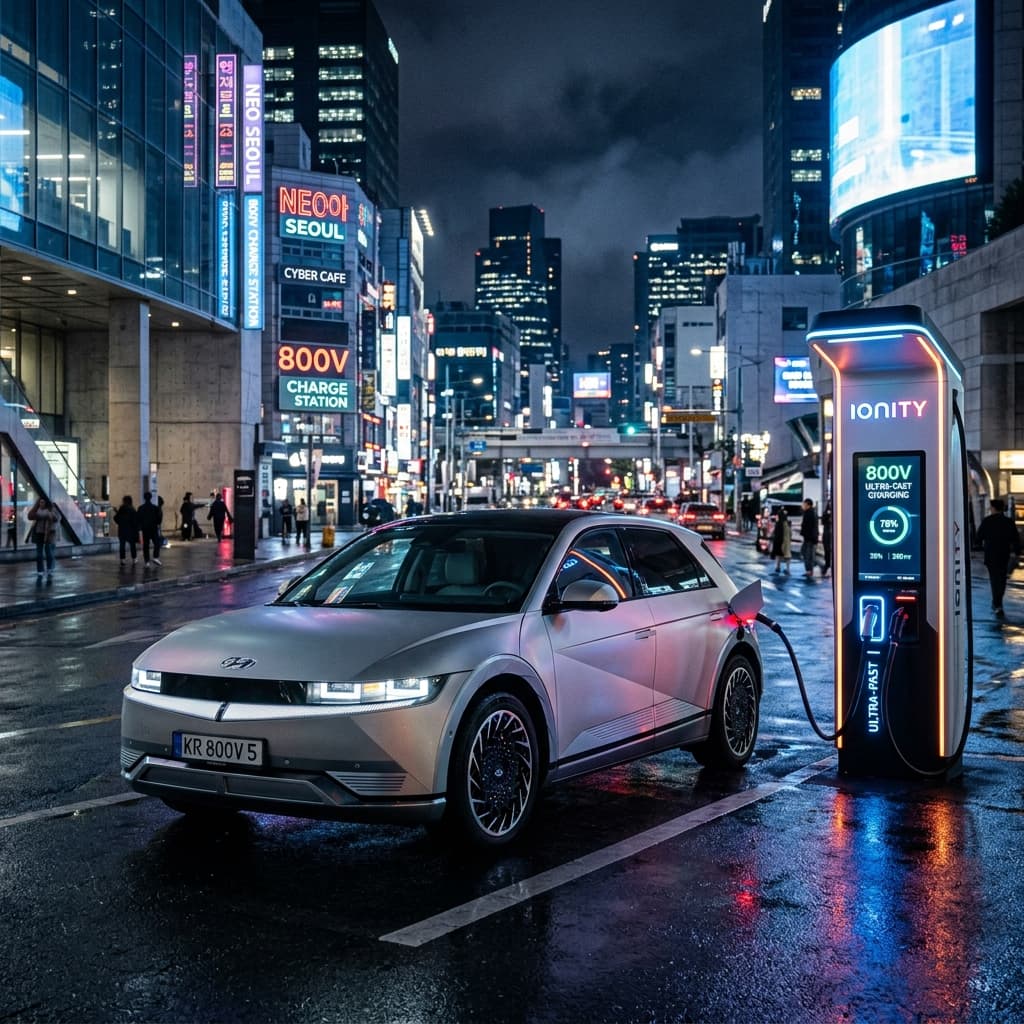
The Hyundai Ioniq 5 didn't just break the design mold with its 80s-pixel aesthetics; it broke the charging barrier. While most EVs (including Teslas) use a 400-volt electrical system, the Ioniq 5 operates at **800 volts**. To the average driver, that sounds like nerd talk. To the road-tripper, it means the difference between a lunch break and a bathroom break.
The 18-Minute Milestone
On a 350kW ultra-fast charger (like those from Electrify America), the Ioniq 5 can go from **10% to 80% charge in just 18 minutes**. That is class-leading. Most competitors, including the Ford Mach-E or the VW ID.4, take 35 to 45 minutes for that same stretch. If you drive long distances, those 20 extra minutes per stop add up fast.
Efficiency vs. Design
The Ioniq 5 is shaped like a giant hatchback, which is cool as hell but not particularly aerodynamic. Because of its boxy rear and wide stance, its highway efficiency (around 2.8 - 3.2 mi/kWh) is lower than the Tesla Model 3. However, Hyundai combats this by simply making it charge faster. You might stop more often, but the stops are half as long.
V2L: Your Car as a Giant Power Bank
One of the Ioniq 5's "killer features" is **Vehicle-to-Load (V2L)**. It has a standard 120V outlet under the rear seats and can even have an adapter for the charging port outside. This lets you run a coffee maker, a laptop, or even power your home refrigerator during a blackout. It provides up to **3.6kW of power**, making it a favorite for campers and outdoor enthusiasts.
The Cabin Space
Because it sits on the flat E-GMP platform, the interior space is massive. The center console slides back, the front seats recline like lounge chairs with footrests, and the floor is completely flat. It feels like a living room on wheels.
The Weak Spot: Software and Infotainment
While the hardware is futuristic, the software feels a bit "legacy." You have to use a wire for Apple CarPlay or Android Auto (in older models), and the interface is less intuitive than Tesla or Rivian. Additionally, the lack of a rear windshield wiper on early models became a major annoyance for owners in snowy climates (partially fixed in 2025 updates).
The Verdict
The Hyundai Ioniq 5 is the best "non-Tesla" EV for most people. Its combination of incredible charging speeds, unique design, and practical interior space makes it a generational talent. If you value fast pit stops over a minimalist software ecosystem, this is your car.
Use the article, then make a decision
Spoiler: It's cheaper than gas, but the math isn't as simple as everyone tells you. We break down home vs. public charging costs in 2024.
The ultimate showdown between pure electric commitment and the convenience of a gasoline backup. Which technology fits your 2024 lifestyle?
Debunking the 'battery death' myth. We look at 10 years of data from over 20,000 electric vehicles to see how they age.
Stop reading generic advice.
Run your exact commute and energy rates through our calculators.